Regulatory Balance in Swedish Mobile Casinos: Driving Innovation While Upholding Protections for Payments and Play
Uma Bauer · Nov 8, 2026

Regulatory Balance in Swedish Mobile Casinos: Driving Innovation While Upholding Protections for Payments and Play
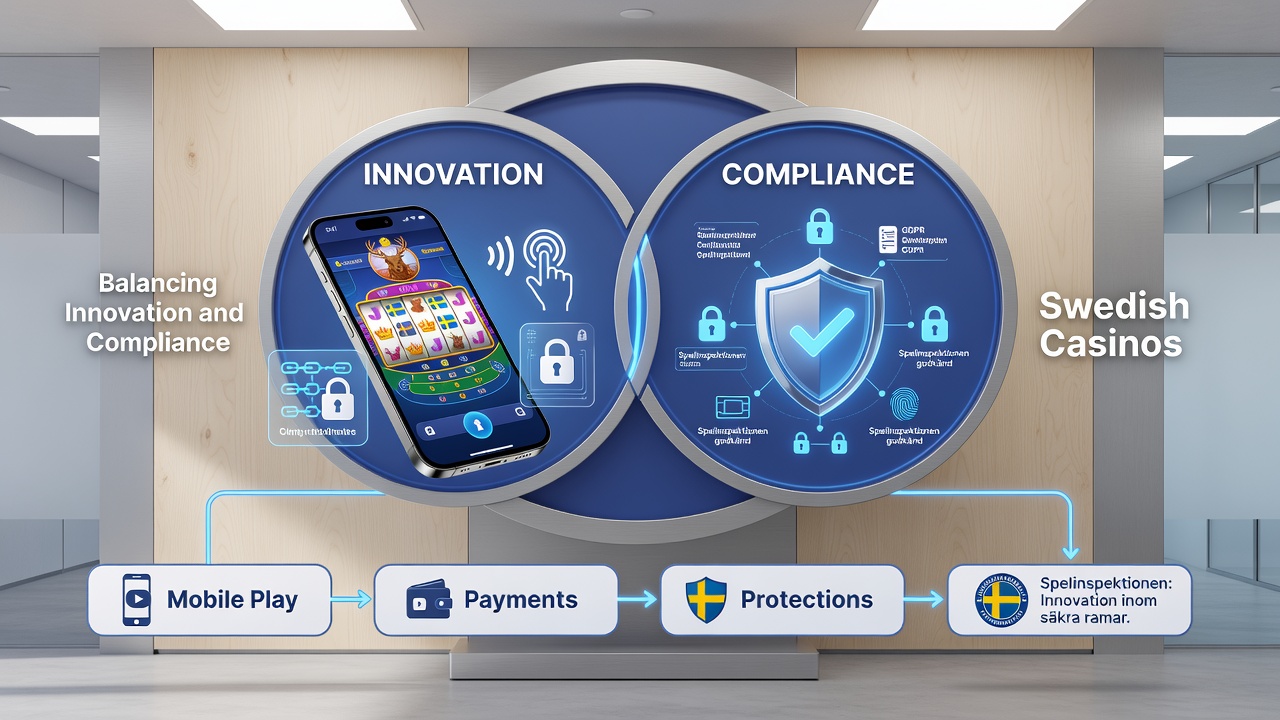
Sweden maintains a structured licensing system that supports mobile casino growth while enforcing clear rules on payments and player safeguards, and operators continue to integrate new features under oversight from the Spelinspektionen. Mobile platforms now handle a significant share of activity in the regulated market, with data from late 2025 showing continued expansion into 2026 as developers refine user interfaces for smartphones and tablets. Those who track industry metrics observe that real-time game streaming, instant deposit options, and adaptive security protocols appear side by side in licensed environments, creating a setting where technical progress must align with mandatory reporting and verification steps.
Mobile Play Features Under Licensed Conditions
Swedish operators deliver mobile access to slots, table games, and live dealer sessions through applications and browser-based platforms that incorporate location checks and age verification at login, while the framework requires every title to carry certification for fairness before it reaches players. Data indicates that participation via mobile devices rose steadily through 2025, and figures for November 2026 reflect further adoption as bandwidth improvements allow smoother sessions without compromising the required audit trails that authorities review. Experts note that developers often embed responsible gaming prompts directly into the interface, such as session timers and spending trackers, because the licensing conditions tie these tools to ongoing approval rather than treating them as optional additions.
Payment Systems and Transaction Oversight
Payment flows in the Swedish market rely on trusted methods that include bank transfers, e-wallets, and card options, each processed through channels that record every movement for compliance review, and operators must demonstrate that funds move only after identity confirmation. Research from industry reports shows that transaction volumes handled via mobile apps increased markedly in the past year, prompting providers to adopt layered authentication that combines device recognition with one-time codes. Observers point out that these steps reduce friction for users while satisfying the documentation demands placed on license holders, and the result appears in fewer disputed transfers because records remain centralized and accessible to regulators.
Player Protection Mechanisms in Practice
Protection protocols require self-exclusion registers, deposit limits, and reality checks that activate at set intervals, and licensed sites integrate these functions so they cannot be bypassed during mobile sessions. According to Spelinspektionen guidelines, every operator submits regular reports detailing how these tools perform, which allows authorities to identify patterns and adjust requirements when needed. Studies conducted by Nordic research groups reveal that players who activate multiple safeguards tend to maintain steadier activity levels over time, and the data supports the continuation of mandatory features rather than voluntary ones alone.
Aligning New Technology With Existing Rules
Innovation in mobile casino environments often involves artificial intelligence for fraud detection and personalized game recommendations, yet each advancement undergoes evaluation against the same licensing criteria that cover payment integrity and player data handling. Those who monitor regulatory updates note that November 2026 brought renewed emphasis on cross-device consistency, meaning any new feature introduced on phones must mirror the safeguards already present on desktop versions. Industry associations such as the European Gaming and Betting Association have published summaries showing how operators in several member states, including Sweden, coordinate technical upgrades with compliance teams from the outset rather than retrofitting afterward.
Case Examples From the Market
One licensed operator introduced a mobile wallet that completes deposits in under ten seconds while routing every confirmation through the national verification service, and subsequent audits confirmed that the speed did not reduce the accuracy of identity checks. Another provider tested a predictive tool that flags unusual betting sequences and pauses play until a manual review occurs, and early results submitted to authorities indicated improved detection rates without extending average session times. These examples illustrate how the regulatory structure encourages measured rollout of new functions, because each change must pass internal testing and external validation before wider release.
Conclusion
Swedish casino operators continue to expand mobile capabilities in payments and gameplay while operating within a licensing model that prioritizes verifiable safeguards and documented processes. The combination of technical development and regulatory checkpoints produces an environment where new features reach users only after they satisfy established criteria, and ongoing data collection helps refine those criteria as usage patterns evolve. This measured approach keeps the market functional for participants and accountable to oversight bodies through 2026 and beyond.